
ADHD Social Anxiety: Why You Doubt Yourself Even When You’re Capable

A lot of people with ADHD grow up with the wrong story about themselves. They are told they are inconsistent, distracted, too much, not enough, careless, or full of unrealized potential. Over time, that language does real damage. It turns a difference in processing into a judgment about character. Then, when social anxiety is layered on top, the problem becomes heavier. The person is no longer only trying to manage attention, timing, working memory, or follow-through. They are also trying to manage how they are seen, how they might be judged, and what it means if they get something wrong in front of other people.
That is why ADHD is not simply about not being able. For many people, it is about processing information, urgency, stimulation, and environment differently. Adult ADHD is also commonly accompanied by anxiety and depression, which can worsen functioning and quality of life. The tragedy is that many capable people with ADHD do not struggle because they lack intelligence or potential. They struggle because their way of processing is often misunderstood, because their self-perception has taken damage, and because social anxiety teaches them to second-guess what they already know.
ADHD social anxiety is more common than many people realize
ADHD and social anxiety are not a random pairing. A 2024 systematic review found substantial evidence of a relationship between ADHD and social anxiety disorder across clinical and non-clinical populations. Broader adult ADHD reviews also show high rates of co-occurring anxiety disorders.
This matters because ADHD social anxiety does not always look dramatic. Sometimes it looks like overthinking after conversations, hesitating to speak up even when you know the answer, needing extra time to organize a response, or assuming everyone noticed your mistake more than they actually did. It can also show up as avoidance. A person may be bright, capable, and full of ideas, but begin shrinking in social or professional settings because they have learned to expect embarrassment, interruption, or misunderstanding.
The self-perception problem can become bigger than the attention problem
One of the most damaging parts of ADHD is not always the symptoms themselves. It is the story a person builds around the symptoms.
If someone repeatedly experiences forgetfulness, missed details, disorganization, or inconsistent performance under pressure, they may eventually stop seeing those struggles as situational or neurological. They start seeing them as proof about who they are. That is where self-perception begins to harden in the wrong direction. Reviews and recent studies consistently show lower self-esteem in adults with ADHD compared with controls, and symptoms tend to correlate negatively with self-esteem.
That helps explain why some adults with ADHD sound much harsher toward themselves than the evidence would justify. They do not just say, “I struggle with follow-through.” They say, “I am unreliable.” They do not just say, “I need more structure.” They say, “I can’t handle life like other people.” The self-concept becomes distorted by repeated friction, repeated correction, and repeated comparison.

ADHD is not a deficit in intelligence
This point needs to be said plainly. ADHD does not mean a person is less intelligent. It does not mean they lack talent. It does not mean they cannot succeed. What it often means is that the brain responds differently to stimulation, novelty, urgency, reward, and task interest. The same person who cannot start one task may be able to hyperfocus intensely on another. The same person who looks disorganized in one environment may function far better in a fast-paced, stimulating, highly engaging setting. Adult ADHD reviews describe the condition as one affecting attention regulation, executive functioning, and self-management, not basic intelligence.
That does not make ADHD a superpower in some shallow way. It does mean the common story of “you just can’t” is often false. In many cases, the more accurate question is, “Under what conditions do you function well, and under what conditions do you stall out?” That is a very different frame from assuming low ability.
Why some people with ADHD can become highly successful
Not everyone with ADHD thrives, and it would be dishonest to romanticize the struggle. But it would also be dishonest to reduce ADHD to failure. Some people with ADHD do especially well in environments that reward speed, creativity, novelty, risk tolerance, improvisation, stimulation, or unconventional thinking. Research has linked ADHD traits with higher real-world creative achievement in some contexts, and there is also evidence that some ADHD traits, especially hyperactivity-related traits, are positively associated with self-employment and entrepreneurial intentions.
The important point is not that ADHD guarantees greatness. It does not. The point is that ADHD traits can propel certain people when the environment fits their nervous system and when shame is not constantly blocking access to their strengths. Strengths-focused qualitative work with adults with ADHD has highlighted creativity, humor, hyperfocus, energy, and out-of-the-box thinking as recurring positives.
Social anxiety can hide real capability
This is where the combination gets especially painful. A person may have real strengths, real intelligence, real creativity, and real potential, but social anxiety keeps those qualities from showing up consistently in public. They may over-edit themselves, avoid opportunities, second-guess their instincts, or assume they need to appear perfectly composed before they are allowed to participate.
So the outside world sees hesitation and assumes lower ability. The person feels that misread and becomes even more self-conscious. That cycle can go on for years.
In that way, ADHD social anxiety is not only a performance issue. It is an identity issue. It changes how people interpret themselves. It can make them assume that because they struggle in certain settings, they are fundamentally less capable. But the research on self-esteem and self-concept in ADHD suggests that what often gets damaged is not raw ability. It is the person’s relationship with their own capacity.
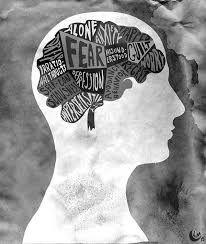
What healthier self-perception looks like
Healthier self-perception in ADHD does not mean pretending the challenges are not real. It means telling a more accurate story.
A healthier frame sounds like this: “I process differently, so I need different structure.” It sounds like, “I may need more stimulation, more visual support, more accountability, or a better environment, but that does not mean I lack ability.” It sounds like, “Some of what I have called weakness is actually a mismatch between how I function and what the environment expects.”
That shift matters because shame and distorted self-perception often create more suffering than the symptoms alone. When the self-story improves, people can start building support around what is true instead of around what they have been afraid is true.
What helps
People with ADHD social anxiety often need support in more than one lane. They may need practical systems for follow-through, better sleep, more realistic workload management, and environments that fit their attention profile. They may also need help addressing the emotional fallout of years of misattunement, underperformance in the wrong settings, or humiliation in social spaces. Reviews of adult ADHD interventions support multi-component approaches rather than one-size-fits-all thinking, and CBT-based treatments have shown benefits for core ADHD symptoms and emotional symptoms in adults.
Sometimes the most important treatment target is not simply productivity. It is self-trust. It is the ability to stop reading every struggle as proof of inadequacy. It is the ability to see that different processing does not mean diminished value.

Final thought
ADHD is not simply about not being able. For many people, it is about processing information differently in a world that keeps rewarding one narrow style of functioning. When social anxiety and damaged self-perception get layered on top, the person may begin to doubt abilities they genuinely have. That is why some of the most capable people with ADHD do not look confident at first. They are not lacking intelligence. They are carrying interference.
And yet that same different wiring, in the right context, can support creativity, originality, humor, urgency, innovation, and nontraditional success. The goal is not to romanticize ADHD or minimize its cost. The goal is to tell a more accurate truth. ADHD can absolutely create struggle. But for many people, the deeper problem is not low ability. It is years of misunderstanding, misfit, and self-doubt.
FAQ
Can ADHD cause social anxiety? ADHD and social anxiety are strongly associated, but one does not automatically cause the other. The overlap is common enough that both should be considered when someone feels chronically overwhelmed in social or evaluative settings.
Does ADHD mean lower intelligence? No. ADHD affects attention regulation, inhibition, motivation, and self-management, not intelligence itself.
Why do adults with ADHD often have low self-esteem? Repeated struggles, criticism, inconsistency, and social comparison can distort self-concept over time. Studies consistently show lower self-esteem in adults with ADHD.
Can people with ADHD be highly successful? Yes. Some people with ADHD do very well in environments that reward creativity, novelty, speed, stimulation, and unconventional problem-solving, though success usually depends on fit, support, and self-understanding rather than ADHD alone.
Disclaimer
This blog post is for educational and informational purposes only and is not a substitute for professional counseling, therapy, psychological treatment, medical care, diagnosis, or individualized advice. Reading this content does not create a therapist–client relationship. If you are in immediate danger or experiencing an emergency, call 911 or go to your nearest emergency room. If you are in the U.S. and need immediate support, call or text 988.
Works cited
Boot, N., Nevicka, B., & Baas, M. (2020). Creativity in ADHD: Goal-directed motivation and domain specificity. Journal of Attention Disorders, 24(13), 1857–1866.
Cook, J., Knight, E., Hume, I., & Qureshi, A. (2014). The self-esteem of adults diagnosed with attention-deficit/hyperactivity disorder: A systematic review of the literature. Attention Deficit and Hyperactivity Disorders, 6(4), 249–268.
Lauder, K., Hall, R., Symonds, A., et al. (2022). A systematic review of interventions to support adults with ADHD at work. BMC Psychiatry, 22, 634.
Lopez, P. L., et al. (2018). Cognitive-behavioural interventions for attention deficit hyperactivity disorder (ADHD) in adults. Cochrane Database of Systematic Reviews.
Liu, C. I., et al. (2023). Cognitive behavioral therapy for adults with ADHD: A meta-analysis of randomized controlled trials. Journal of Affective Disorders.
Nordby, E. S., et al. (2023). Silver linings of ADHD: A thematic analysis of adults’ positive experiences with ADHD. Frontiers in Psychiatry, 14.
Pedersen, A. B., et al. (2024). Self-esteem in adults with ADHD: A systematic review. Journal of Attention Disorders.
Sônego, M., et al. (2020). Exploring the association between attention-deficit/hyperactivity disorder and entrepreneurship. International Entrepreneurship and Management Journal.
Støre, S. J., et al. (2024). The relationship between social anxiety disorder and ADHD: A systematic review. Frontiers in Psychiatry, 15.
Verheul, I., Rietdijk, W., Block, J., et al. (2016). The association between attention-deficit/hyperactivity disorder and self-employment. Small Business Economics, 46, 417–437.


Comments